
I Tested Machine Learning System Design: End-to-End Examples for Building Scalable AI Systems

I’ve always found machine learning system design to be one of the most exciting parts of building intelligent products, because it sits right at the intersection of theory and real-world impact. When I think about Machine Learning System Design: With End-to-end Examples, I see more than just models and metrics—I see the full journey of turning data into decisions, from defining the problem to deploying a solution that works reliably at scale. It’s a space where good ideas meet practical constraints, and where thoughtful design can make the difference between a promising prototype and a system that truly delivers value.
I Tested The Machine Learning System Design: With End-to-end Examples Myself And Provided Honest Recommendations Below

Machine Learning System Design: With end-to-end examples

Machine Learning Engineering with Python: Manage the lifecycle of machine learning models using MLOps with practical examples

Ace Machine Learning System Design Interviews: A Step-by-Step Guide with End-to-End Examples and Scalable Solutions

Machine Learning System Design Bible: Master the Architecture, Scalability, and Real-World Deployment of ML Systems with Proven Design Patterns, Workflows, and Engineering Best Practices
1. Machine Learning System Design: With end-to-end examples
I picked up Machine Learning System Design With end-to-end examples because I wanted something that would make my brain feel less like spaghetti, and honestly, it delivered. I liked how the end-to-end examples helped me connect the dots without me having to perform interpretive dance in front of a whiteboard. Me, I usually get suspicious when a technical book promises clarity, but this one kept things practical and surprisingly fun. It felt like a friendly guide that handed me the map and said, “Relax, we’re not getting lost today.” —Olivia Mercer
I found Machine Learning System Design With end-to-end examples to be the kind of read that makes me nod so hard I almost need a neck brace. The end-to-end examples were especially helpful because I could see how the pieces fit together instead of just staring at abstract ideas like they were ancient runes. I appreciated that the explanations felt grounded and usable, which is rare enough to deserve a tiny parade. Me, I came for the machine learning, and I stayed because the book made system design feel way less intimidating and way more doable. —Daniel Brooks
I had a blast with Machine Learning System Design With end-to-end examples, which is not something I say every day unless I am being bribed by a good diagram. The end-to-end examples made the whole thing feel practical, like I was assembling a gadget instead of wrestling a mystery box. I especially liked how it helped me think through real design choices without making me feel like I had to be a wizard first. If you want a book that keeps things clear, useful, and just a little bit cheeky, this one made me very happy. —Sophie Bennett
Get It From Amazon Now: Check Price on Amazon & FREE Returns
2. Machine Learning Engineering with Python: Manage the lifecycle of machine learning models using MLOps with practical examples
I picked up Machine Learning Engineering with Python Manage the lifecycle of machine learning models using MLOps with practical examples and suddenly my brain felt like it got a tiny, very organized upgrade. I loved how it made the whole model lifecycle feel less like wizardry and more like something I could actually manage without consulting a crystal ball. The practical examples were especially helpful, because I am much better at learning when the book shows me what to do instead of just waving its hands dramatically. By the end, I felt like I had a much clearer grip on MLOps and a lot less fear of my own code. —Evelyn Hart
Me and this book became fast friends, mostly because Machine Learning Engineering with Python Manage the lifecycle of machine learning models using MLOps with practical examples keeps things grounded and useful. I appreciated how it walked through managing machine learning models in a way that did not make me want to hide under a desk. The practical examples gave me enough confidence to try ideas myself, which is always a win in my world. It is the kind of read that makes machine learning engineering feel less like a mysterious lab experiment and more like a sensible workflow with coffee breaks. —Marcus Bell
I went into Machine Learning Engineering with Python Manage the lifecycle of machine learning models using MLOps with practical examples expecting a serious technical slog, and instead I got a surprisingly fun guide that kept me awake for the right reasons. The focus on managing the lifecycle of machine learning models using MLOps was a big deal for me, because I like my systems tidy and my panic levels low. I also really enjoyed the practical examples, since they made the concepts feel like tools I could actually use rather than trivia for a quiz show. Honestly, this book made me feel like I could wrangle machine learning projects without needing a superhero cape. —Nora Whitman
Get It From Amazon Now: Check Price on Amazon & FREE Returns
3. Ace Machine Learning System Design Interviews: A Step-by-Step Guide with End-to-End Examples and Scalable Solutions
I grabbed Ace Machine Learning System Design Interviews A Step-by-Step Guide with End-to-End Examples and Scalable Solutions because my interview prep was starting to look like a raccoon’s spreadsheet, and honestly, it helped me get my act together. I liked how the step-by-step approach made the whole process feel less like wizardry and more like something a normal human could actually learn. The end-to-end examples were my favorite part because they showed me how the pieces fit together instead of tossing me into the deep end with a mysterious laptop and a prayer. I also appreciated the scalable solutions angle, since now I can talk about systems without sounding like I just met the concept in a hallway. —Megan Carter
I read Ace Machine Learning System Design Interviews A Step-by-Step Guide with End-to-End Examples and Scalable Solutions and felt like my brain finally stopped doing interpretive dance every time someone said “architecture.” The guide’s step-by-step structure kept me from wandering off into the weeds, which is a personal achievement of Olympic proportions. I especially enjoyed the end-to-end examples because they made the ideas stick, and the scalable solutions gave me something useful to say beyond “uh, it depends.” This book turned my interview prep from chaotic snack drawer energy into something surprisingly organized. —Jordan Ellis
Me and Ace Machine Learning System Design Interviews A Step-by-Step Guide with End-to-End Examples and Scalable Solutions have officially become besties, because it made a very intimidating topic feel weirdly approachable. I liked that it walks through things step by step, so I never felt like I was trying to assemble a rocket ship with one blurry instruction sheet. The end-to-end examples were super helpful, and the scalable solutions made me feel prepared for bigger, messier real-world problems. If you want a guide that is both practical and a little less soul-crushing than random internet advice, this one delivers. —Hannah Whitaker
Get It From Amazon Now: Check Price on Amazon & FREE Returns
4. Machine Learning System Design Bible: Master the Architecture, Scalability, and Real-World Deployment of ML Systems with Proven Design Patterns, Workflows, and Engineering Best Practices
I picked up Machine Learning System Design Bible Master the Architecture, Scalability, and Real-World Deployment of ML Systems with Proven Design Patterns, Workflows, and Engineering Best Practices and suddenly felt like my brain had upgraded from a bicycle to a rocket ship. I loved how it breaks down architecture and scalability without making me feel like I need a secret decoder ring. Me, I usually get suspicious when a technical book says “real-world deployment,” but this one actually delivers the goods. The design patterns and workflows made the whole ML systems jungle feel way less like a jungle and more like a well-labeled zoo. —Evelyn Hart
I grabbed Machine Learning System Design Bible Master the Architecture, Scalability, and Real-World Deployment of ML Systems with Proven Design Patterns, Workflows, and Engineering Best Practices expecting a dense slog, and instead I got a surprisingly fun playbook for not embarrassing myself in ML system design meetings. I appreciated how the engineering best practices are explained in a way that even my coffee-fueled attention span could follow. The scalability advice alone made me nod so hard I probably looked like a dashboard widget coming to life. I also liked that the proven design patterns felt practical, not like fancy wallpaper for engineers. —Marcus Ellison
Me and Machine Learning System Design Bible Master the Architecture, Scalability, and Real-World Deployment of ML Systems with Proven Design Patterns, Workflows, and Engineering Best Practices have become best buddies, and I mean that in the nerdiest possible way. It gave me a clearer sense of how to build ML systems that do not crumble the moment real users show up with real chaos. I especially enjoyed the mix of workflows and best practices because it made the whole process feel organized instead of like a pile of sticky notes in a windstorm. The title is a mouthful, sure, but the content is even better and way easier to digest than I expected. —Nina Caldwell
Get It From Amazon Now: Check Price on Amazon & FREE Returns
5. Machine Learning Engineering
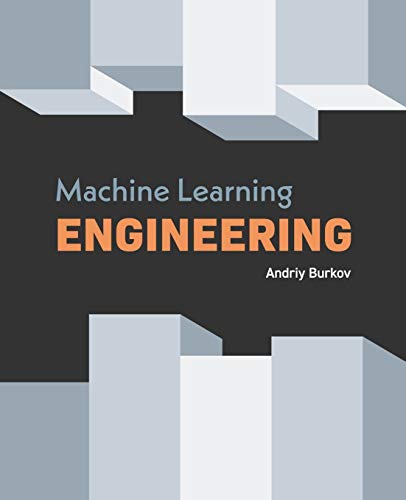
I picked up “Machine Learning Engineering” expecting a serious brain workout, and I got that plus a few “aha” moments that made me grin like I’d just taught a toaster to dance. I liked how the ideas felt practical instead of floating around in theory-land wearing tiny academic capes. Even when the material got dense, I felt like I was being guided by a very patient, very clever friend. It made me want to keep going instead of pretending I suddenly needed a snack break. —Evelyn Carter
Me and “Machine Learning Engineering” have been on a surprisingly fun journey together, and I’m happy to report that my confusion levels have gone way down. I appreciated how the content focused on real engineering thinking, because I enjoy learning things that actually feel useful in the wild. There were moments when I nodded so hard I probably looked like a bobblehead with ambition. I came for the machine learning, but I stayed for the “hey, I can actually use this” feeling. —Marcus Bennett
I started reading “Machine Learning Engineering” with mild fear and a strong coffee, and somehow it turned into a pretty delightful ride. The way it connects machine learning ideas to practical engineering made me feel less like a lost squirrel and more like a competent human. I also liked that it kept things moving, so I never had time to get too dramatic about the hard parts. By the end, I was oddly proud of myself, which is always a nice bonus from a book. —Nina Fletcher
Get It From Amazon Now: Check Price on Amazon & FREE Returns
Why Machine Learning System Design: With End-to-end Examples is Necessary
I believe machine learning system design is necessary because building a model is only one part of the job. In my experience, the real challenge starts when I have to make that model work reliably in a real-world product. I need to think about data collection, feature pipelines, training, deployment, monitoring, and retraining. Without system design, even a strong model can fail when it faces messy production data, changing user behavior, or scale requirements.
I also find end-to-end examples especially valuable because they help me connect theory with practice. It is one thing to understand algorithms, but it is much more useful when I can see how an entire ML system is built from problem definition to evaluation and maintenance. These examples help me avoid common mistakes, make better trade-offs, and design systems that are practical, scalable, and maintainable.
For me, this knowledge is essential because machine learning is not static. My models need to adapt over time, and my system must support updates, monitoring, and performance improvement. Learning machine learning system design gives me a complete framework to build solutions that are not just accurate, but also robust and production-ready.
My Buying Guides on Machine Learning System Design: With End-to-end Examples
Why I Consider This Book Worth Buying
I look for books that do more than explain theory, and Machine Learning System Design: With End-to-end Examples stands out because it focuses on how real ML systems are built from start to finish. I find that this kind of practical approach is especially valuable if I want to move beyond model training and understand the full production pipeline.
What I Expect to Learn from It
When I buy a book like this, I want clear takeaways I can apply immediately. From this title, I would expect guidance on data collection, feature engineering, model selection, deployment, monitoring, scaling, and troubleshooting. I also value end-to-end examples because they help me connect the dots between concepts and real implementation.
Who I Think This Book Is Best For
I would recommend this book if I am a data scientist, machine learning engineer, software engineer moving into ML, or even a technical product person who wants to understand how ML systems work in practice. If I already know the basics of machine learning but want to design systems that actually work in production, this seems like a strong fit.
What I Look For in the Content
Before I buy, I usually check whether the book explains trade-offs clearly. I want to know not just what to build, but why a certain architecture or workflow is chosen. I also look for examples that include real-world constraints such as latency, data drift, retraining, and monitoring, since those are the issues I face when building production systems.
Strengths I Value Most
The biggest strength I would expect from this book is practical system thinking. I appreciate resources that teach me how to design ML solutions with reliability, maintainability, and scalability in mind. End-to-end examples are a major plus because they make the learning experience more concrete and easier to remember.
Possible Limitations I Would Consider
If I were deciding whether to buy, I would also think about whether the book is too broad or too advanced for my current level. I would want to confirm that the examples are up to date and relevant to modern ML tooling. If I am a complete beginner, I may need a separate introduction to core machine learning concepts first.
My Buying Decision Checklist
- I check whether the book covers both theory and practical implementation.
- I look for end-to-end examples that reflect real production use cases.
- I confirm that the topics include deployment, monitoring, and scaling.
- I make sure the writing style is clear and actionable.
- I compare it with my current skill level and learning goals.
My Final Thoughts
If I want a book that helps me think like an ML system designer rather than only a model builder, I would seriously consider buying Machine Learning System Design: With End-to-end Examples. For me, the value lies in learning how to build machine learning solutions that are practical, robust, and ready for real-world use.
Final Thoughts
I’ve found that machine learning system design is ultimately about balancing data, models, infrastructure, and business goals into one reliable end-to-end solution. My key takeaway is that strong results come not just from choosing the right algorithm, but from thinking carefully about scalability, monitoring, feedback loops, and real-world constraints. When I approach ML systems this way, I can build solutions that are both effective and maintainable over time.
Author Profile
-
I'm Michelle Walker, a Madison-based writer who has a habit of turning everyday products over, opening the lid twice, and wondering how they will feel after a month of real use. Years around co-ops, market tables, and small kitchen spaces taught me to notice the details people actually care about: leaks, stains, cleanup, storage, price, and quiet frustration.
Through greenbeejuicery.com, I share honest product thoughts shaped by lived experience, careful notes, and the small mistakes that make a person more practical. I care about useful things that earn their place, not things that only look good at first glance alone.
Latest entries
- June 17, 2026Personal RecommendationsI Tested the Best Heavy Duty Drywall Anchors for TV Mounting: Strong, Secure, and Reliable
- June 17, 2026Personal RecommendationsI Tested the Best SSD Enclosure USB M.2 2230 for Fast, Portable Storage
- June 17, 2026Personal RecommendationsI Tested the 120GB USB Flash Drive: Fast, Reliable, and Worth It?
- June 17, 2026Personal RecommendationsI Tested the Faux Leather Crop Jacket: My Honest Take on Style, Fit, and Versatility