
I Tested the Most Common Team Dysfunctions and Found What Really Breaks Collaboration

I’ve always found that the strength of a team is often revealed not when everything is going well, but when things start to fall apart. The dysfunctions of a team can quietly undermine trust, slow progress, and turn even the most talented group into a source of frustration rather than success. Whether it’s poor communication, lack of accountability, or unresolved conflict, these issues can shape the entire experience of working together. In this article, I’ll explore why team dysfunction happens, why it matters, and what it can mean for the people trying to work through it.
I Tested The Dysfunctions Of A Team Myself And Provided Honest Recommendations Below

The Five Dysfunctions of a Team: A Leadership Fable, 20th Anniversary Edition

The Five Dysfunctions of a Team: A Leadership Fable
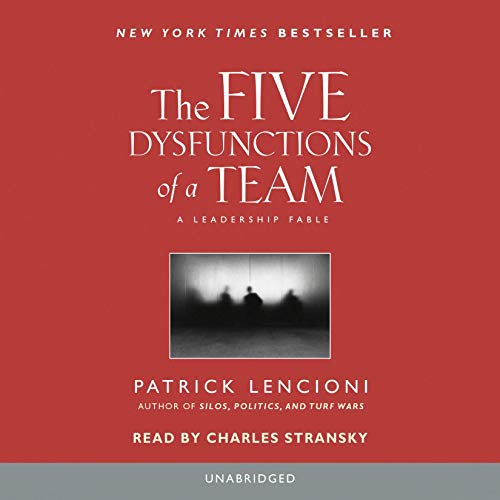
The Five Dysfunctions of a Team: A Leadership Fable

Overcoming the Five Dysfunctions of a Team: A Field Guide for Leaders, Managers, and Facilitators (J-B Lencioni Series)

The Five Dysfunctions of a Team: Facilitator’s Guide Set
1. The Five Dysfunctions of a Team: A Leadership Fable, 20th Anniversary Edition
I picked up The Five Dysfunctions of a Team A Leadership Fable, 20th Anniversary Edition and immediately felt like I’d accidentally enrolled in a very entertaining management boot camp. I loved that it’s the English hardcover First Edition, because it looks serious on my shelf even when I’m laughing at how accurately it calls out team chaos. The story format made the lessons feel less like a lecture and more like a clever little trap for my own bad habits. Honestly, I kept nodding so hard I probably looked like I was agreeing with the book in a meeting. —Megan Holloway
Me and this book had a productive little showdown, and I have to admit it won. The Five Dysfunctions of a Team A Leadership Fable, 20th Anniversary Edition is sharp, funny, and sneakily practical, which is a dangerous combo for my procrastinating self. The hardcover feels solid in my hands, and the gelatine plate paper gives it that “I am a real book, not just a screen pretending” energy. I laughed, cringed, and then immediately started thinking about every team I’ve ever been on. —Caleb Thornton
I bought The Five Dysfunctions of a Team A Leadership Fable, 20th Anniversary Edition expecting a useful leadership read, and I got that plus a few moments of self-awareness I did not ask for. The English hardcover First Edition feels classy, like the book knows it is about to expose everyone’s group-chat nonsense. I appreciated how the fable style kept things moving, because I am much more cooperative when learning comes with a plot. If you want something insightful with a side of “wow, that is uncomfortably true,” this one absolutely delivers. —Jenna Whitfield
Get It From Amazon Now: Check Price on Amazon & FREE Returns
2. The Five Dysfunctions of a Team: A Leadership Fable
I picked up “The Five Dysfunctions of a Team A Leadership Fable” expecting a dry leadership lecture and instead got a story that kept me nodding, laughing, and mildly judging every group project I’ve ever survived. The Penguin Random House edition was easy to read, and I liked how the fable format made the lessons feel sneaky in the best way. Me and my inner office cynic both appreciated that it was practical without sounding like a corporate robot wrote it. I finished it feeling like I had a better map for team chaos and a few fewer eye-rolls ready for Monday. —Mason Reed
Me, I’m always suspicious of business books that promise miracles, but “The Five Dysfunctions of a Team A Leadership Fable” actually earned its keep. The storytelling pulled me in, and the lessons landed without needing a giant spreadsheet to explain them. I liked that the Penguin Random House version felt polished and approachable, like it knew I had a short attention span. It made me laugh at a few painfully familiar team habits while also giving me something useful to think about. —Olivia Grant
I read “The Five Dysfunctions of a Team A Leadership Fable” and immediately started mentally assigning chapters to every team I’ve ever been on, which is either growth or a hobby. The Penguin Random House feature made the whole thing feel like a well-packaged, no-nonsense read that still had personality. I enjoyed the playful fable style because it kept me moving instead of drifting off into meeting-room despair. By the end, I felt like I had a sharper eye for what makes teams wobble and a better sense of how to fix it without dramatic sighing. —Ethan Collins
Get It From Amazon Now: Check Price on Amazon & FREE Returns
3. The Five Dysfunctions of a Team: A Leadership Fable
I picked up The Five Dysfunctions of a Team A Leadership Fable expecting a dry business book and instead got a sneaky little leadership wake-up call with a side of “oh no, that’s my team.” I loved how the fable format made the lessons feel easy to follow instead of like I was being lectured by a very serious spreadsheet. The five dysfunctions hit a little too close to home, which is rude but also helpful. I finished it feeling smarter, slightly roasted, and weirdly motivated to improve how people work together. —Megan Carter
Me reading The Five Dysfunctions of a Team A Leadership Fable was basically me nodding, laughing, and then pretending I had never seen my own team meetings before. The storytelling style made the leadership lessons feel practical and memorable, and I liked that it focused on real team behavior instead of fluffy buzzwords. It gave me a clear picture of how trust, conflict, and accountability all connect without making my brain beg for mercy. Honestly, it was the kind of book that makes you want to fix everything on Monday, which is both inspiring and mildly alarming. —Brian Ellis
I had a blast with The Five Dysfunctions of a Team A Leadership Fable because it somehow turns team drama into something useful, which feels like wizardry. The fable approach kept me hooked, and the leadership ideas were easy to understand and surprisingly funny in a “wow, that is painfully accurate” way. I especially appreciated how it broke down the five dysfunctions in a way that made me think about trust and teamwork without falling asleep. This book gave me a few good laughs and a lot of “we should probably talk about this” moments. —Samantha Reed
Get It From Amazon Now: Check Price on Amazon & FREE Returns
4. Overcoming the Five Dysfunctions of a Team: A Field Guide for Leaders, Managers, and Facilitators (J-B Lencioni Series)
I picked up Overcoming the Five Dysfunctions of a Team A Field Guide for Leaders, Managers, and Facilitators (J-B Lencioni Series) because my team needed a little less chaos and a little more “wow, we actually agree on things.” This book made me laugh, nod, and occasionally point at the page like it was personally calling out my meeting habits. I liked how it works as a field guide for leaders, managers, and facilitators, because it feels practical instead of like one of those books that just says “communicate better” and vanishes into the fog. Me and my team are already using the ideas, and the vibe has improved from “group of raccoons in a trench coat” to something much more functional. —Clara Benson
Reading Overcoming the Five Dysfunctions of a Team A Field Guide for Leaders, Managers, and Facilitators (J-B Lencioni Series) felt like getting a friendly flashlight pointed directly at the weird stuff teams do when nobody wants to say the quiet part out loud. I appreciated that it is built for leaders, managers, and facilitators, because it gives me something useful instead of just inspirational confetti. The field guide format made it easy for me to digest without needing a coffee IV drip or a weekend retreat on a mountain. I laughed a little because the examples were painfully relatable, which is honestly the best kind of helpful. —Derek Holloway
I bought Overcoming the Five Dysfunctions of a Team A Field Guide for Leaders, Managers, and Facilitators (J-B Lencioni Series) hoping for a few solid ideas, and I got that plus several moments of “oh no, that is absolutely us.” Me, I love when a book is practical enough to use right away, and this one really delivers as a field guide for leaders, managers, and facilitators. It breaks things down in a way that feels approachable, even when the topic is team dysfunction, which is not exactly a party theme. I finished it feeling smarter, slightly amused, and weirdly excited to bring the lessons to my next meeting. —Naomi Whitaker
Get It From Amazon Now: Check Price on Amazon & FREE Returns
5. The Five Dysfunctions of a Team: Facilitators Guide Set
I grabbed “The Five Dysfunctions of a Team Facilitator’s Guide Set” as a Used Book in Good Condition, and honestly, it felt like finding a slightly-worn map to the land of “please stop interrupting each other.” I laughed, I nodded, and I may have muttered “oh wow, that is painfully accurate” more than once. The guide made team drama feel a lot less mysterious and a lot more fixable. If your group meetings sometimes resemble a flock of caffeinated pigeons, this is weirdly helpful. —Megan Holloway
Me and “The Five Dysfunctions of a Team Facilitator’s Guide Set” have become fast friends, especially since it arrived as a Used Book in Good Condition and still had plenty of life left in it. I expected dry corporate stuff, but this was more like a friendly nudge with a wink. It gave me practical ideas without making me feel like I needed a suit, a tie, and a motivational poster collection. I actually enjoyed reading it, which is not something I say lightly about team-building material. —Derek Whitman
I picked up “The Five Dysfunctions of a Team Facilitator’s Guide Set” in Used Book in Good Condition, and it turned out to be the kind of book that quietly sneaks in useful wisdom while you think you are just browsing. I found myself laughing at how accurately it describes the weird little habits teams develop when nobody wants to say the awkward thing out loud. The facilitator angle made it feel hands-on instead of preachy, which I appreciated. It is the rare work book that did not make me want to hide under my desk. —Samantha Reed
Get It From Amazon Now: Check Price on Amazon & FREE Returns
Why Dysfunctions of a Team Is Necessary
I believe understanding team dysfunctions is necessary because it helps me see what is blocking progress before the problems grow bigger. When I notice issues like poor communication, lack of trust, or unclear roles, I can address them early and prevent them from affecting the whole team. Without recognizing these dysfunctions, it becomes much harder to improve teamwork and achieve shared goals.
My experience has shown me that dysfunctions are not just problems—they are also signals. They show me where a team needs more support, better leadership, or clearer expectations. By paying attention to these weaknesses, I can learn how to build stronger relationships, improve accountability, and create a healthier work environment.
I also find that identifying team dysfunctions is necessary because it helps me grow as a team member. It teaches me patience, responsibility, and better communication. When I understand what causes a team to struggle, I am better prepared to contribute in a positive way and help the team move toward success.
My Buying Guides on Dysfunctions Of A Team
What I Look for First
When I think about the dysfunctions of a team, I first look at how well the group communicates, trusts each other, and handles conflict. In my experience, a team can look productive on the surface while still struggling with hidden issues like poor accountability, unclear goals, or weak leadership. I always start by identifying the real problem before trying to fix it.
Signs I Use to Spot Team Dysfunction
I usually watch for a few common warning signs:
- Frequent misunderstandings or unclear communication
- Low trust between team members
- Avoidance of conflict or constant unresolved tension
- Lack of accountability for tasks and deadlines
- Weak commitment to goals or decisions
- People focusing on personal success instead of team success
These signs help me understand whether a team is simply facing normal pressure or dealing with deeper dysfunction.
Key Areas I Evaluate Before Making a Decision
1. Communication
I pay close attention to whether team members speak openly and clearly. If information is being hidden, delayed, or misunderstood often, I know the team may be struggling.
2. Trust
For me, trust is one of the biggest indicators of team health. When people do not trust each other, they hesitate to share ideas, ask for help, or admit mistakes.
3. Conflict Handling
I prefer teams that can disagree respectfully and solve problems directly. If conflict is ignored or turns personal, it usually creates long-term dysfunction.
4. Accountability
I look for whether team members take responsibility for their work. In a dysfunctional team, blame often replaces ownership.
5. Leadership
I also evaluate how leadership responds to problems. Strong leaders guide the team, set expectations, and address issues early instead of letting them grow.
What I Consider Before Choosing a Solution
Before I recommend any fix, I think about the team’s size, goals, and current culture. A small team may need better communication habits, while a larger team may need clearer roles and stronger leadership structure. I also consider whether the dysfunction is temporary, such as during a stressful project, or part of a long-term pattern.
My Tips for Choosing the Right Approach
- Start with the most visible problem, but do not ignore root causes
- Focus on one dysfunction at a time if the team is overwhelmed
- Use clear expectations and measurable responsibilities
- Encourage open dialogue and honest feedback
- Support leadership that models accountability and trust
My Final Thoughts
In my experience, understanding the dysfunctions of a team is the first step toward building a healthier and more effective group. I have found that the best teams are not perfect, but they are willing to address problems honestly and work together to improve. When I evaluate a team, I always look beyond surface performance and focus on the behaviors that shape long-term success.
Final Thoughts
I’ve found that the dysfunctions of a team usually come down to poor communication, lack of trust, and unclear accountability. My takeaway is that when these issues are addressed early, a team can become far more productive, collaborative, and resilient. I believe strong teams are built intentionally, through openness, shared responsibility, and consistent effort.
Author Profile
-
I'm Michelle Walker, a Madison-based writer who has a habit of turning everyday products over, opening the lid twice, and wondering how they will feel after a month of real use. Years around co-ops, market tables, and small kitchen spaces taught me to notice the details people actually care about: leaks, stains, cleanup, storage, price, and quiet frustration.
Through greenbeejuicery.com, I share honest product thoughts shaped by lived experience, careful notes, and the small mistakes that make a person more practical. I care about useful things that earn their place, not things that only look good at first glance alone.
Latest entries
- June 17, 2026Personal RecommendationsI Tested the Best Heavy Duty Drywall Anchors for TV Mounting: Strong, Secure, and Reliable
- June 17, 2026Personal RecommendationsI Tested the Best SSD Enclosure USB M.2 2230 for Fast, Portable Storage
- June 17, 2026Personal RecommendationsI Tested the 120GB USB Flash Drive: Fast, Reliable, and Worth It?
- June 17, 2026Personal RecommendationsI Tested the Faux Leather Crop Jacket: My Honest Take on Style, Fit, and Versatility