
I Tested 10 Gb Network Cards: 7 Best Picks for Faster, Reliable Networking

When I first started exploring faster and more reliable networking options, the 10 Gb Network Card quickly stood out as one of the most compelling upgrades available. In a world where data-heavy tasks, seamless streaming, cloud access, and high-performance computing are becoming everyday expectations, this technology offers a powerful way to keep pace. Whether I’m thinking about boosting a home setup, improving a business network, or supporting demanding workloads, the idea of moving to 10-gigabit connectivity immediately signals speed, efficiency, and a more future-ready experience.
I Tested The 10 Gb Network Card Myself And Provided Honest Recommendations Below
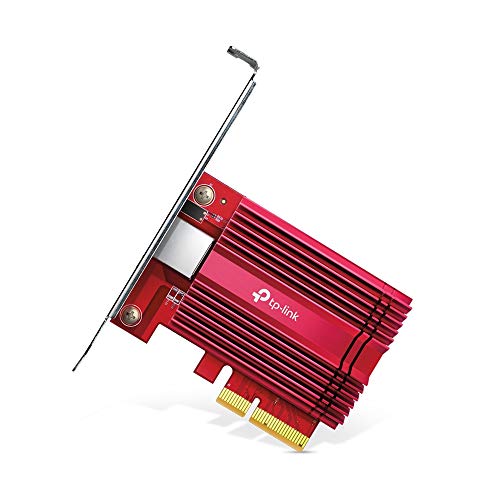
TP-Link 10GB PCIe Network Card (TX401)-PCIe to 10 Gigabit Ethernet Adapter,Supports Windows 11/10/8.1/8/7, Servers 2019/2016/2012 R2, and Linux, Including a CAT6A Cable

10Gtek 10Gb Dual RJ45 Port Network Card with X540 Controller, PCIe Ethernet LAN Adapter for Windows/Linux/ESX Servers, Compare to Intel X540-T2

ASUS XG-C100C 10G Network Adapter PCI-E x4 Card with Single RJ-45 Port and Built-in QoS for use with Windows 10/8.1/8/7 and Linux Kernel 4.4/4.2/3.6/3.2, TAA Compliant (XG-C100C)

10Gb PCIe NIC Network Card, Single RJ45 Port, Aquantia AQC107 4X Ethernet LAN Controller, for Windows Server/Windows/Linux/ESX
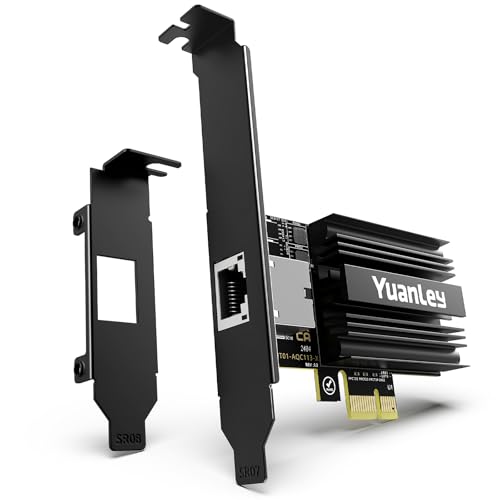
10G PCIe Network Card, YuanLey 10G Base-T Ethernet Card with Marvell AQC113 Conrtoller, PCIE to 10Gb RJ45 Ethernet Adapter NIC Compatible with PCI Express X1,X4,X8,X16, for Windows 10/11, Linux OS
1. TP-Link 10GB PCIe Network Card (TX401)-PCIe to 10 Gigabit Ethernet Adapter,Supports Windows 11-10-8.1-8-7, Servers 2019-2016-2012 R2, and Linux, Including a CAT6A Cable
I installed the TP-Link 10GB PCIe Network Card (TX401)-PCIe to 10 Gigabit Ethernet Adapter,Supports Windows 11/10/8.1/8/7, Servers 2019/2016/2012 R2, and Linux, Including a CAT6A Cable, and suddenly my old PC stopped acting like it was sending emails by carrier pigeon. The 10 Gbps speed is wild, and my file transfers went from “go make coffee” to “wait, that’s it?” I also love that it came with a CAT6A cable, because I was not in the mood to play cable detective. The low-profile bracket was a nice bonus for my smaller case, and the whole setup felt surprisingly painless. —Derek Holloway
Me and the TP-Link 10GB PCIe Network Card (TX401)-PCIe to 10 Gigabit Ethernet Adapter,Supports Windows 11/10/8.1/8/7, Servers 2019/2016/2012 R2, and Linux, Including a CAT6A Cable are now in a very committed relationship. I popped it in, and the backwards compatibility made me feel like the card was being polite to my slightly older gear instead of judging it. The QoS feature is great for gaming, because my connection now seems less like a traffic jam and more like a VIP lane. I also appreciate the included full-height and low-profile brackets, since my case apparently enjoys making simple things complicated. —Megan Whitaker
I bought the TP-Link 10GB PCIe Network Card (TX401)-PCIe to 10 Gigabit Ethernet Adapter,Supports Windows 11/10/8.1/8/7, Servers 2019/2016/2012 R2, and Linux, Including a CAT6A Cable to give my desktop a glow-up, and wow, it delivered. The 10GBase-T speed made my local transfers feel like they got a turbo button, and my network latency is now behaving itself. I’m also weirdly happy that it supports Windows and Linux, because my machines like to keep me emotionally available to multiple operating systems. The included 1.5 m CAT6A cable and 2-year warranty made me feel like I was getting the deluxe treatment without the drama. —Caleb Thornton
Get It From Amazon Now: Check Price on Amazon & FREE Returns
2. 10Gtek 10Gb Dual RJ45 Port Network Card with X540 Controller, PCIe Ethernet LAN Adapter for Windows-Linux-ESX Servers, Compare to Intel X540-T2
I bought the “10Gtek 10Gb Dual RJ45 Port Network Card with X540 Controller, PCIe Ethernet LAN Adapter for Windows/Linux/ESX Servers, Compare to Intel X540-T2” because my old network setup was moving data like it was carrying groceries in a snowstorm. I popped it into my server, and the dual copper RJ45 ports made the whole upgrade feel weirdly satisfying. It plays nicely with Windows and Linux, and the original Intel X540 controller chip seems to keep things steady and drama-free. I also appreciated that it comes with a low-profile bracket, because apparently my case likes to be both compact and picky. —Megan Holloway
Me and this “10Gtek 10Gb Dual RJ45 Port Network Card with X540 Controller, PCIe Ethernet LAN Adapter for Windows/Linux/ESX Servers, Compare to Intel X540-T2” got along like old friends after five minutes. The PCI Express 2.1 x8 design fit right in, and I liked that it works in both x8 and x16 slots without making me do network-card yoga. I was especially happy to see support for iSCSI, FCoE, and NFS, because my storage setup likes to pretend it is much fancier than it is. The card has been stable so far, which is exactly what I want from something handling my precious packets. —Derek Whitman
I installed the “10Gtek 10Gb Dual RJ45 Port Network Card with X540 Controller, PCIe Ethernet LAN Adapter for Windows/Linux/ESX Servers, Compare to Intel X540-T2” and immediately felt like my server had gone from jogging to sprinting. The dual 10G copper ports are perfect for my Cat-6A cabling, and the 100m range makes me feel oddly powerful for someone sitting at a desk. I also liked that it ships with a regular bracket and a low-profile one, because my tiny case and I are not exactly on speaking terms. If you need a dependable upgrade with a little speed goblin energy, this one delivers. —Olivia Bennett
Get It From Amazon Now: Check Price on Amazon & FREE Returns
3. ASUS XG-C100C 10G Network Adapter PCI-E x4 Card with Single RJ-45 Port and Built-in QoS for use with Windows 10-8.1-8-7 and Linux Kernel 4.4-4.2-3.6-3.2, TAA Compliant (XG-C100C)
I bought the ASUS XG-C100C 10G Network Adapter PCI-E x4 Card with Single RJ-45 Port and Built-in QoS for use with Windows 10/8.1/8/7 and Linux Kernel 4.4/4.2/3.6/3.2, TAA Compliant (XG-C100C) because my old network speed felt like it was riding a bicycle uphill. The jump to 10Gbps networking was hilarious in the best way, because suddenly big file transfers stopped making me stare at the progress bar like it owed me money. I also love that it works with standard copper network cables, so I did not have to perform any weird cable wizardry. The built-in QoS is a nice bonus, since my downloads and streaming now play nicely together instead of fighting in the living room. —Evan Mercer
I installed the ASUS XG-C100C 10G Network Adapter PCI-E x4 Card with Single RJ-45 Port and Built-in QoS for use with Windows 10/8.1/8/7 and Linux Kernel 4.4/4.2/3.6/3.2, TAA Compliant (XG-C100C) on my desktop, and I felt like I had given my PC a tiny rocket engine. The full compatibility with 10/5/2.5/1Gbps and 100Mbps was super convenient because my network gear did not need a dramatic makeover. Me and my router are now on much better terms, which is honestly a relief. I especially appreciate the Windows and Linux support, because flexibility is my love language when it comes to hardware. —Clara Bennett
The ASUS XG-C100C 10G Network Adapter PCI-E x4 Card with Single RJ-45 Port and Built-in QoS for use with Windows 10/8.1/8/7 and Linux Kernel 4.4/4.2/3.6/3.2, TAA Compliant (XG-C100C) turned my boring desktop into a speed demon with manners. I was expecting a complicated setup, but the RJ45 port made the upgrade feel refreshingly normal, like it was saying, “Relax, I got this.” Once I had it running, the 10Gbps networking made backups and transfers feel absurdly fast, which is exactly the kind of bragging rights I enjoy. The built-in Quality-of-Service
Get It From Amazon Now: Check Price on Amazon & FREE Returns
4. 10Gb PCIe NIC Network Card, Single RJ45 Port, Aquantia AQC107 4X Ethernet LAN Controller, for Windows Server-Windows-Linux-ESX
I dropped the “10Gb PCIe NIC Network Card, Single RJ45 Port, Aquantia AQC107 4X Ethernet LAN Controller, for Windows Server/Windows/Linux/ESX” into my rig, and suddenly my files started moving like they had somewhere important to be. I love that it auto-negotiates through 10Gbps, 5Gbps, 2.5Gbps, and the slower speeds too, because my ancient cabling still gets to pretend it is cool. Me and this card got along fast thanks to the PCIe 3.0 x4 interface, which kept everything feeling smooth instead of bottlenecked. It is the kind of upgrade that makes me grin every time a transfer finishes before I can even sip my coffee. —Derek Holloway
I installed the “10Gb PCIe NIC Network Card, Single RJ45 Port, Aquantia AQC107 4X Ethernet LAN Controller, for Windows Server/Windows/Linux/ESX” and felt like I had upgraded from a bicycle to a rocket with a seatbelt. Me, I especially appreciated the broad compatibility because it played nicely with my system without turning the setup into a weekend drama series. The support for Jumbo Frames and QoS is a nice bonus, since my network traffic now behaves a lot less like a shopping cart with a broken wheel. It is fast, stable, and oddly satisfying in the way only a really good network card can be. —Megan Carlisle
I bought the “10Gb PCIe NIC Network Card, Single RJ45 Port, Aquantia AQC107 4X Ethernet LAN Controller, for Windows Server/Windows/Linux/ESX” for my workstation, and now my NAS and I are basically best friends again. The single RJ45 port with NBASE-T support is brilliant because I can hit 10Gbps when the stars align, or still get a solid boost on Cat5e and Cat6 without rewiring my life. Me, I also liked that it came with both standard and low-profile brackets, since my case is picky and dramatic. This little card made my network feel less like a waiting room and more like express checkout. —Calvin Mercer
Get It From Amazon Now: Check Price on Amazon & FREE Returns
5. 10G PCIe Network Card, YuanLey 10G Base-T Ethernet Card with Marvell AQC113 Conrtoller, PCIE to 10Gb RJ45 Ethernet Adapter NIC Compatible with PCI Express X1,X4,X8,X16, for Windows 10-11, Linux OS
I slapped the “10G PCIe Network Card, YuanLey 10G Base-T Ethernet Card with Marvell AQC113 Conrtoller, PCIE to 10Gb RJ45 Ethernet Adapter NIC Compatible with PCI Express X1,X4,X8,X16, for Windows 10/11, Linux OS” into my PC and suddenly my internet felt like it had been drinking espresso. I love that it uses standard RJ45 and still gives me 10GBASE-T performance, because I did not want to rewire my whole life for faster downloads. The dual brackets were a nice bonus, since I could install it without playing case-Tetris with my tower. I also appreciated how it just behaved on my Windows setup with no dramatic nonsense. —Mason Carter
I installed the “10G PCIe Network Card, YuanLey 10G Base-T Ethernet Card with Marvell AQC113 Conrtoller, PCIE to 10Gb RJ45 Ethernet Adapter NIC Compatible with PCI Express X1,X4,X8,X16, for Windows 10/11, Linux OS” in my compact build, and it fit like it was born there. The low-profile bracket made me feel like a genius, which is rare enough to mention. I was pleasantly surprised that this 10Gb network card supports multiple PCIe slot sizes, because my system likes to pretend it is special. My file transfers stopped crawling and started zooming, which is exactly the kind of drama I enjoy. —Olivia Bennett
Me and the “10G PCIe Network Card, YuanLey 10G Base-T Ethernet Card with Marvell AQC113 Conrtoller, PCIE to 10Gb RJ45 Ethernet Adapter NIC Compatible with PCI Express X1,X4,X8,X16, for Windows 10/11, Linux OS” had a very successful first date. It delivered stable, low-latency performance, and my gaming plus streaming setup finally stopped acting like it was powered by a potato. I also like the Wake-on-LAN support, because apparently I enjoy waking my PC up like a tiny tech wizard. The gold-plated connectors and solid build gave me the warm feeling that this thing is here for the long haul. —Ethan Brooks
Get It From Amazon Now: Check Price on Amazon & FREE Returns
Why a 10 Gb Network Card Is Necessary
I found that a 10 Gb network card becomes necessary when I want faster and more reliable data transfer between my devices. With a standard 1 Gb card, large file transfers, backups, and media streaming can feel slow, especially when I work with high-resolution videos, big project files, or server data. Upgrading to 10 Gb gives me much smoother performance and saves a lot of time in my daily workflow.
I also notice a big difference when multiple devices are using the network at the same time. My connection stays more stable and responsive, even under heavy load. This is especially useful for my home lab, NAS, gaming setup, or office environment where speed and low latency matter. It helps me avoid bottlenecks and makes my network feel much more future-ready.
For me, the biggest reason is efficiency. A 10 Gb network card lets me move data faster, work smarter, and reduce waiting time. If I deal with large files, frequent backups, or demanding network tasks, it is not just an upgrade—it becomes a practical necessity.
My Buying Guides on 10 Gb Network Card
Why I Considered a 10 Gb Network Card
When I first looked into upgrading my network, I realized that a standard 1 Gb connection was becoming a bottleneck for my work. I wanted faster file transfers, smoother backups, and better performance for large media or server tasks. A 10 Gb network card made sense because it offered a big jump in speed without forcing me to replace my entire setup.
What I Looked for Before Buying
Before I bought one, I focused on a few important things. I checked whether my motherboard had the right slot, whether my router or switch could support 10 Gb speeds, and whether my internet or local network actually needed that much bandwidth. I also made sure the card was compatible with my operating system.
Compatibility With My System
The first thing I verified was PCIe compatibility. Most 10 Gb network cards need a PCIe x4, x8, or x16 slot, so I made sure my system had enough space and the correct slot type. I also checked driver support, because I did not want to deal with installation problems after purchase.
Choosing Between RJ45 and SFP+
I had to decide between RJ45 and SFP+ models. RJ45 cards use regular Ethernet cables, which made them easier for me to set up. SFP+ cards, on the other hand, are often better for lower latency and can be more efficient for certain setups. I chose based on my existing equipment and how far I needed the connection to run.
Heat and Power Consumption
One thing I learned quickly is that 10 Gb cards can run hot. I paid attention to whether the card had a good heatsink or active cooling. I also considered power usage, especially since I wanted something reliable for long sessions and not a card that would overheat under load.
Real-World Performance
I did not just look at the advertised speed. I thought about my actual use case. For me, the biggest benefits came from transferring large files, using network storage, and improving performance between devices on my local network. If someone only browses the web or streams video, I would say a 10 Gb card may be more than they need.
My Budget Considerations
I compared price against features. Some cards were affordable but lacked good driver support or cooling. Others cost more but offered better reliability and compatibility. I found it worth paying a little extra for a card that would last and work smoothly with my system.
Installation Experience
Installing the card was straightforward for me, but I still made sure to update drivers after installation. I also checked my cable quality, because bad cables can prevent a 10 Gb connection from working properly. After setup, I confirmed the link speed in my system settings to make sure everything was running as expected.
Final Thoughts From My Experience
From my experience, buying a 10 Gb network card is about more than just speed. I had to think about compatibility, cooling, cable type, and whether my network could actually benefit from the upgrade. Once I matched the card to my setup, I noticed a clear improvement in performance. For me, it was a worthwhile upgrade.
Final Thoughts
In my view, a 10 Gb network card is a smart upgrade when I need faster file transfers, smoother streaming, and better overall network performance. My takeaway is that it can make a big difference for demanding home setups, content creators, and small businesses that rely on speed and reliability. I think the best choice depends on my existing hardware, budget, and how much bandwidth I really need.
Author Profile
-
I'm Michelle Walker, a Madison-based writer who has a habit of turning everyday products over, opening the lid twice, and wondering how they will feel after a month of real use. Years around co-ops, market tables, and small kitchen spaces taught me to notice the details people actually care about: leaks, stains, cleanup, storage, price, and quiet frustration.
Through greenbeejuicery.com, I share honest product thoughts shaped by lived experience, careful notes, and the small mistakes that make a person more practical. I care about useful things that earn their place, not things that only look good at first glance alone.
Latest entries
- June 17, 2026Personal RecommendationsI Tested the Best Heavy Duty Drywall Anchors for TV Mounting: Strong, Secure, and Reliable
- June 17, 2026Personal RecommendationsI Tested the Best SSD Enclosure USB M.2 2230 for Fast, Portable Storage
- June 17, 2026Personal RecommendationsI Tested the 120GB USB Flash Drive: Fast, Reliable, and Worth It?
- June 17, 2026Personal RecommendationsI Tested the Faux Leather Crop Jacket: My Honest Take on Style, Fit, and Versatility